
Smart IoT Traffic System: Real-Time Signal Control for Cities 🚦
Transform traffic chaos into smooth flow — this IoT-powered traffic light system uses real-time sensor data to cut congestion and reduce wait times.

The Traffic Problem We All Know Too Well
If you’ve ever sat at a red light with zero cars crossing the other way, you’ve experienced the inefficiency of conventional traffic systems. These lights follow rigid, preprogrammed timers — whether the lanes are empty, jam-packed, or anything in between. Multiply that by thousands of intersections in a city, and the result is predictable: more congestion, wasted fuel, longer commutes, rising emissions, and frustrated drivers.
But with the rise of the Internet of Things, we now have the tools to challenge old assumptions about traffic control systems. Instead of time-based signals, we can build data-driven, adaptive traffic lights that react to actual conditions — not outdated cycle charts.
This is exactly what this project demonstrates.
What This Project Does
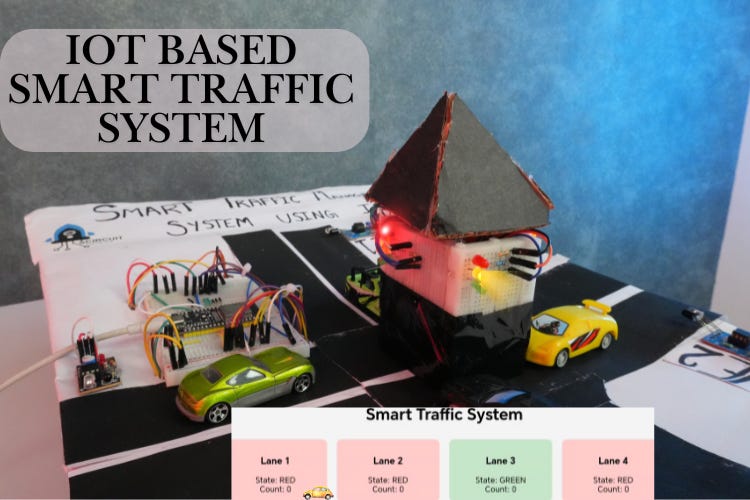
This IoT-powered traffic management system uses ESP32, IR sensors, and a lightweight web dashboard to detect vehicle presence in real time and adjust signal timing on the fly.
Whenever a lane becomes crowded, the system gives it priority by extending the green light or switching more quickly. When lanes are empty, it reduces green time and keeps vehicles moving efficiently elsewhere.
It’s a small prototype — but it captures the exact logic behind modern smart-city intersections.
Why Real-Time Traffic Control Matters
1. Reduces Congestion
Dynamic timing means no more long red lights when a lane is empty — and no more short greens when a lane is full.
2. Saves Fuel & Reduces Emissions
Every second an engine idles at a light contributes to unnecessary fuel burn. Responsive traffic signals directly reduce that.
3. Improves Road Safety
Fewer backups and more predictable flow reduce risky lane-switching and illegal stops.
4. Scalable to Smart Cities
This same architecture scales to larger systems with AI cameras, cloud analytics, or vehicle-to-infrastructure (V2I) communication.
How the System Works
📡 Sensors Detect Traffic
IR sensors at each lane monitor vehicle presence. If a lane shows a high count, it’s flagged for priority.
🧠 ESP32 Controls the Logic
The microcontroller reads sensor data and dynamically determines:
Which lane should get the next green
How long each green interval should last
How fast should the cycle shift during low traffic
🌐 Live Dashboard Visualisation
A simple web server runs on the ESP32, displaying:
Current active signal
Vehicle presence/absence per lane
System timing and queue status
This gives users a real-time view into how the system behaves — perfect for demos, classroom use, or debugging.
What You Need to Build It
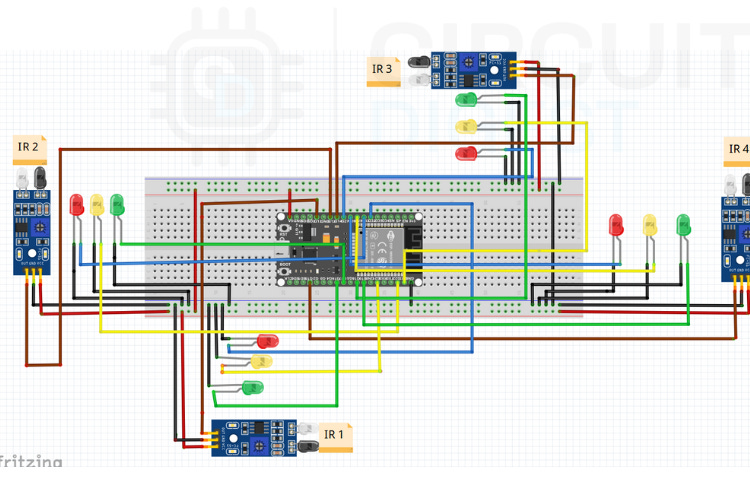
ESP32 development board
IR obstacle sensors (one for each lane)
LEDs for signal simulation (Red/Yellow/Green)
Jumper wires & breadboard
Power supply
The original project includes schematics, wiring diagrams, and code you can reference.
(Credit: CircuitDigest project — “Smart Traffic Management System using IoT”)
Step-By-Step Overview
1. Assemble the Sensor Array
Place IR sensors at each lane to monitor vehicle presence. The ESP32 reads these via its digital GPIO pins.
2. Set Up the Signal LEDs
Red, yellow, and green LEDs simulate real traffic lights.
3. Program the ESP32
Key parts of the logic include:
Reading sensor values
Measuring lane occupancy
Running the adaptive timing algorithm
Serving the web page UI
(Insert your code or link to your repository here.)
4. Launch the Web Dashboard
Connect to the ESP32’s hosted page to visualise traffic state and see real-time updates.
Potential Upgrades to Make It Even Smarter
Your readers will love knowing they can push the system further. Here are excellent enhancement ideas:
AI-Powered Vehicle Detection
Swap IR sensors with camera modules + edge-AI (like ESP32-CAM or TinyML) to classify vehicles and count density.
Machine-Learning-Based Timing
Train a model to predict optimal signal lengths during different times of day.
Cloud Connectivity
Send traffic data to a remote dashboard for long-term analytics.
Vehicle-to-Infrastructure (V2I) Communication
Let vehicles broadcast their presence, enabling even smoother priority routing.
Emergency Vehicle Priority
Detect ambulances or fire trucks and clear the lane ahead of time.
Final Thoughts
This project might look small on a breadboard, but the concept behind it scales to the heart of traffic systems worldwide. With a few sensors, a microcontroller, and some clever logic, you’ve built a working prototype of a technology that could one day reduce hours of daily congestion for millions.